Secure Your Wallets
from Illicit Funds
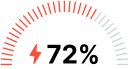
Receiving funds of illegal origin could lead to the risk of having your funds frozen
Avoid Risk
Check if a wallet or transaction is linked to scams or stolen funds. This helps you avoid losing money or getting your account blocked.

Stay in Control
Before you send or receive crypto, check the other wallet. Make sure it's safe so you don't deal with risky addresses.

Stay Compliant
Comply with evolving regulations and avoid penalties. Regular checks help you adhere to legal requirements, avoiding penalties and legal issues.

What do we analyze?
Staying compliant with evolving regulatory standards is crucial in the cryptocurrency world. Regular checks help you adhere to legal requirements, avoiding penalties and legal issues.
High Risk
-
Child Exploitation
Wallets and entities linked to child exploitation materials or activities. Immediate reporting and avoidance required.
-
Dark Market
Cryptocurrency traced to darknet marketplaces selling illegal goods and services. High risk of legal consequences.
-
Dark Service
Funds connected to serious criminal activities including child abuse, terrorist financing, or international drug trafficking operations.
-
Enforcement Action
Addresses under active investigation or legal proceedings by law enforcement agencies. Transactions may be frozen or seized.
-
Fraudulent Exchange
Exchanges involved in exit scams, illegal operations, or whose assets have been confiscated by authorities.
-
Mixer & Tumbler
Funds processed through mixing services to obscure transaction history. Primarily used for money laundering and hiding illicit origins.
-
Scam & Stolen Coins
Cryptocurrency obtained through fraud, phishing, hacks, or theft. May result in account freezes and legal complications.
-
Sanctions
Wallets and entities on OFAC, UN, or EU sanctions lists. Transactions are illegal and subject to severe penalties.
Medium Risk
-
Unverified Exchanges
Trading platforms operating without proper licensing or regulatory oversight. May lack adequate security and compliance measures.
-
Privacy Coins
Cryptocurrencies like Monero or Zcash with built-in anonymity features. Often flagged by exchanges due to regulatory concerns.
-
High-Risk Jurisdictions
Transactions originating from countries with weak AML regulations or limited international cooperation on financial crime.
-
Gambling Services
Unlicensed online casinos and betting platforms that may not comply with gambling regulations or anti-money laundering standards.
-
P2P Exchanges
Peer-to-peer platforms with minimal or no KYC requirements. Increased risk of encountering illicit funds or unverified counterparties.
Trusted Sources
-
Regulated Exchanges
Fully licensed cryptocurrency exchanges operating under strict regulatory compliance with robust KYC/AML procedures and user protection.
-
Verified Institutions
Traditional banks, payment processors, and financial institutions with established regulatory oversight and compliance frameworks.
-
Known Entities
Recognized businesses, merchants, and service providers with proven track records and transparent operations in the crypto space.
-
DeFi Protocols
Decentralized finance platforms that have undergone comprehensive security audits and maintain transparent, reputable operations.
-
Verified Wallets
Wallet addresses that have completed KYC verification processes and are linked to identified, legitimate users or entities.